

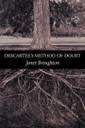

Descartes's Method of Doubt (English, Paperback, Broughton Janet)
Share
Descartes's Method of Doubt (English, Paperback, Broughton Janet)
Be the first to Review this product
₹5,548
₹7,333
24% off
Available offers

T&C
T&C
T&C
T&C
Delivery
Check
Enter pincode
Delivery by7 Feb, Saturday
?
View Details
Highlights
- Language: English
- Binding: Paperback
- Publisher: Princeton University Press
- Genre: Philosophy
- ISBN: 9780691117324, 9780691117324
- Pages: 240
Seller

Description
Descartes thought that we could achieve absolute certainty by starting with radical doubt. He adopts this strategy in the Meditations on First Philosophy, where he raises sweeping doubts with the famous dream argument and the hypothesis of an evil demon. But why did Descartes think we should take these exaggerated doubts seriously? And if we do take them seriously, how did he think any of our beliefs could ever escape them? Janet Broughton undertakes a close study of Descartes's first three meditations to answer these questions and to present a fresh way of understanding precisely what Descartes was up to. Broughton first contrasts Descartes's doubts with those of the ancient skeptics, arguing that Cartesian doubt has a novel structure and a distinctive relation to the commonsense outlook of everyday life. She then argues that Descartes pursues absolute certainty by uncovering the conditions that make his radical doubt possible. She gives a unified account of how Descartes uses this strategy, first to find certainty about his own existence and then to argue that God exists.Drawing on this analysis, Broughton provides a new way to understand Descartes's insistence that he hasn't argued in a circle, and she measures his ambitions against those of contemporary philosophers who use transcendental arguments in their efforts to defeat skepticism. The book is a powerful contribution both to the history of philosophy and to current debates in epistemology.
Read More
Specifications
Book Details
| Title |
|
| Imprint |
|
| Product Form |
|
| Publisher |
|
| Source ISBN |
|
| Genre |
|
| ISBN13 |
|
| Book Category |
|
| BISAC Subject Heading |
|
| Book Subcategory |
|
| ISBN10 |
|
| Language |
|
Dimensions
| Height |
|
| Length |
|
| Weight |
|
Be the first to ask about this product
Safe and Secure Payments.Easy returns.100% Authentic products.



Back to top