

Get notified when this item comes back in stock.
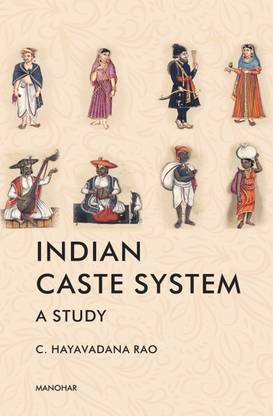
Indian Caste System (English, Hardcover, Rao Hayavadana C.)
Share
Indian Caste System (English, Hardcover, Rao Hayavadana C.)
Be the first to Review this product
Special price
₹255
₹395
35% off
Sold Out
This item is currently out of stock
Highlights
- Language: English
- Binding: Hardcover
- Publisher: Unknown
- Genre: History
- ISBN: 9789374517901
- Edition: 2026
- Pages: 96
Seller

Description
Indian Caste System: A Study by C. Hayavadana Rao is a concise yet important examination of one of India’s most enduring social institutions. First published in 1931, the book gathers together leading views of the time to explain how caste arose, how it worked, and what effects it had on society.
Rao begins with a historical overview of caste before turning to different theories of its origin. He outlines the Brahmanical explanation rooted in religion and custom, then moves through several influential modern interpretations. These include Nesfield’s view of caste as an occupational order, Senart’s focus on ritual prohibitions and sacra-mental practices, and Sir Herbert Risley’s racial theory linking caste to physical and ethnological differences. Finally, Rao presents what he calls the ‘Indian Theory’, grounded in indigenous traditions and social developments.
Beyond questions of origin, the book examines the far-reaching effects of caste on everyday life – its role in shaping identity, regulating social conduct, and maintaining divisions of privilege and exclusion. While cautious in drawing conclusions, Rao emphasizes the importance of continued inquiry. He highlights gaps in evidence and points out directions for further research, stressing that the subject is too large and complex to be closed by any single explanation.
Clear, compact, and accessible, this study remains a valuable window into early twentieth-century scholarship on caste. It introduces readers to the major debates, shows how Indian and Western thinkers grappled with the problem, and underscores why caste has remained a central issue in the study of Indian society.
Read More
Specifications
Dimensions
| Height |
|
| Length |
|
| Weight |
|
Book Details
| Title |
|
| Imprint |
|
| Publication Year |
|
| Product Form |
|
| Publisher |
|
| Genre |
|
| ISBN13 |
|
| Book Category |
|
| BISAC Subject Heading |
|
| Book Subcategory |
|
| Language |
|
Contributors
| Author Info |
|
Be the first to ask about this product
Safe and Secure Payments.Easy returns.100% Authentic products.

Back to top