


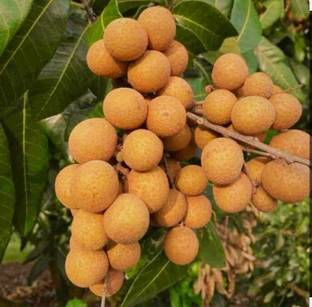
SHYAM Dimocarpus Longan Fruit Plant Seed (1 per packet)
Share
SHYAM Dimocarpus Longan Fruit Plant Seed (1 per packet)
3.8
20 Ratings & 1 Reviews₹145
₹999
85% off
Available offers

T&C
T&C
T&C
T&C
Delivery
Check
Enter pincode
Delivery by10 Jan, Saturday
?
View Details
Highlights
- Seed Type: Fruit
- Suitable For: Outdoor
- Organic Plant Seed
- Seed For: Dimocarpus Longan Fruit Plant
- Quantity: 1 per packet
Services
- Cash on Delivery available?
Seller
Description
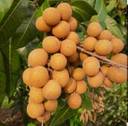
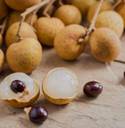
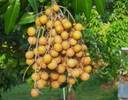
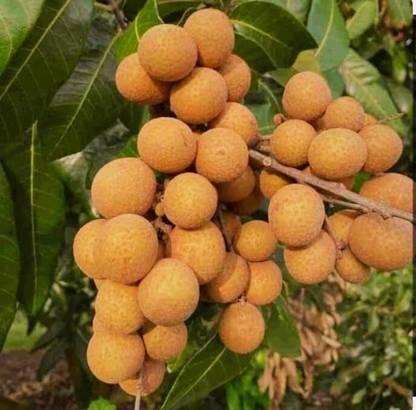
Depending upon climate and soil type the tree may grow to over 100 feet (30 m)[8] in height, but it typically stands 30–40 ft (9–12 m) in height and the crown is round.[3][9] The trunk is 2.5 ft (0.8 m) thick[3] with corky bark.[9] The branches are long and thick, typically drooping.[3] The leaves are oblong and blunt-tipped, usually 4–8 inches (10–20 cm) long and 2 in (5 cm) wide.[3] The leaves are pinnately compounded and alternate.[9] There are 6 to 9 pairs of leaflets per leaf[9] and the upper surface is wavy and a dark, glossy-green.[3] The longan tree produces light-yellow inflorescences at the end of branches.[3] The inflorescence is commonly called a panicle; they can be 4–18 in (10–46 cm) long, and widely branched.[9] The small flowers have 5 to 6 sepals and petals that are brownish-yellow.[9] The flower has a two-lobed pistil and 8 stamen. There are three flower types, distributed throughout the panicle;[3] staminate (functionally male), pistillate (functionally female), and hermaphroditic flowers.[9] Flowering occurs as a progression.[9] The fruit are circular and about 1 in (2.5 cm) wide; they hang in drooping clusters. The peel is tan, thin, and leathery with tiny hairs.[9] The flesh is translucent, and the seed is large and black with a circular white spot at the base.[3][9] This gives the illusion of an eye.[3] The flesh has a musky, sweet taste, which can be compared to the flavor of lychee fruit.[3]
Read More
Specifications
In The Box
|
General
| Brand |
|
| Model Name |
|
| Quantity |
|
| Common Name |
|
| Flowering Plant |
|
| Suitable For |
|
| Type of Seed |
|
| Organic |
|
| Family |
|
| Uses |
|
| Soil Nutrient Requirements |
|
| Net Quantity |
|
Additional Features
| Care Instructions |
|
| Other Features |
|
Frequently Bought Together
Please add at least 1 add-on item to proceed
Ratings & Reviews
3.8
★
20 Ratings &
1 Reviews
- 5★
- 4★
- 3★
- 2★
- 1★
- 10
- 3
- 2
- 2
- 3
2
Could be way better
No good money bigg lo
READ MORESuresh Suri
Certified Buyer, Tumkur District
7 months ago
3
0
Report Abuse
Questions and Answers
Q:Is it grafted
A:yes
SRDEWAN
Flipkart Seller1
0
Report Abuse
Q:How many size will the plant be? How long will it take to get delivery and will the saplings be fresh?
A:2 ft, and yes it will be fesh
SRDEWAN
Flipkart Seller1
0
Report Abuse
Didn't get the right answer you were looking for
Safe and Secure Payments.Easy returns.100% Authentic products.

Back to top